This little power trimaran unit appeared at the local Searay dealer. This is the pointy end.
Am thinking that it actually should be called WT-F.
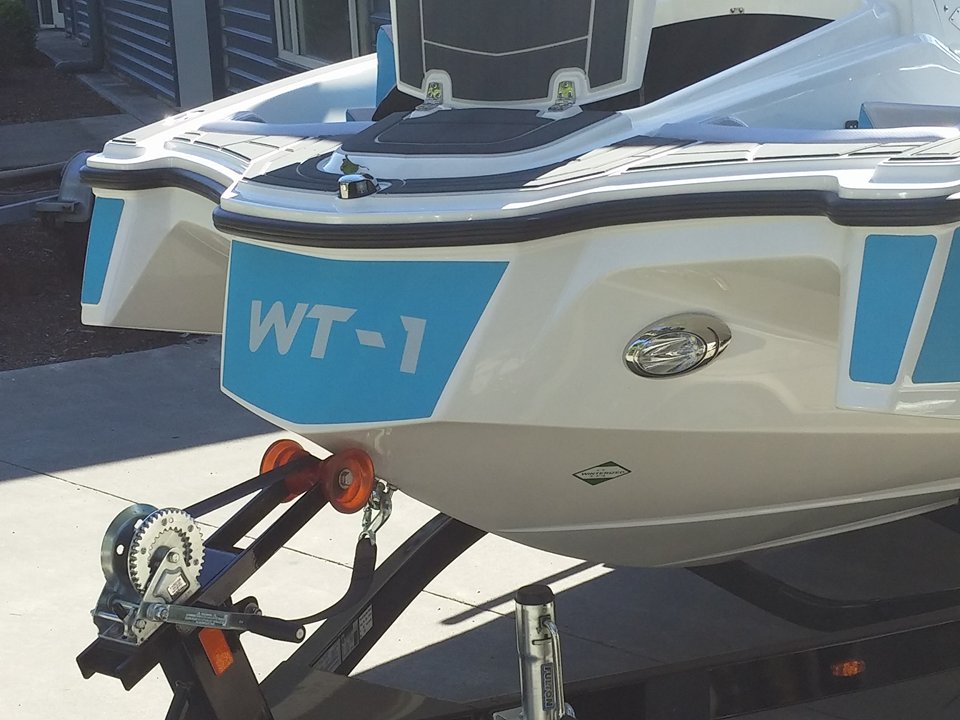
This little power trimaran unit appeared at the local Searay dealer. This is the pointy end.
Am thinking that it actually should be called WT-F.
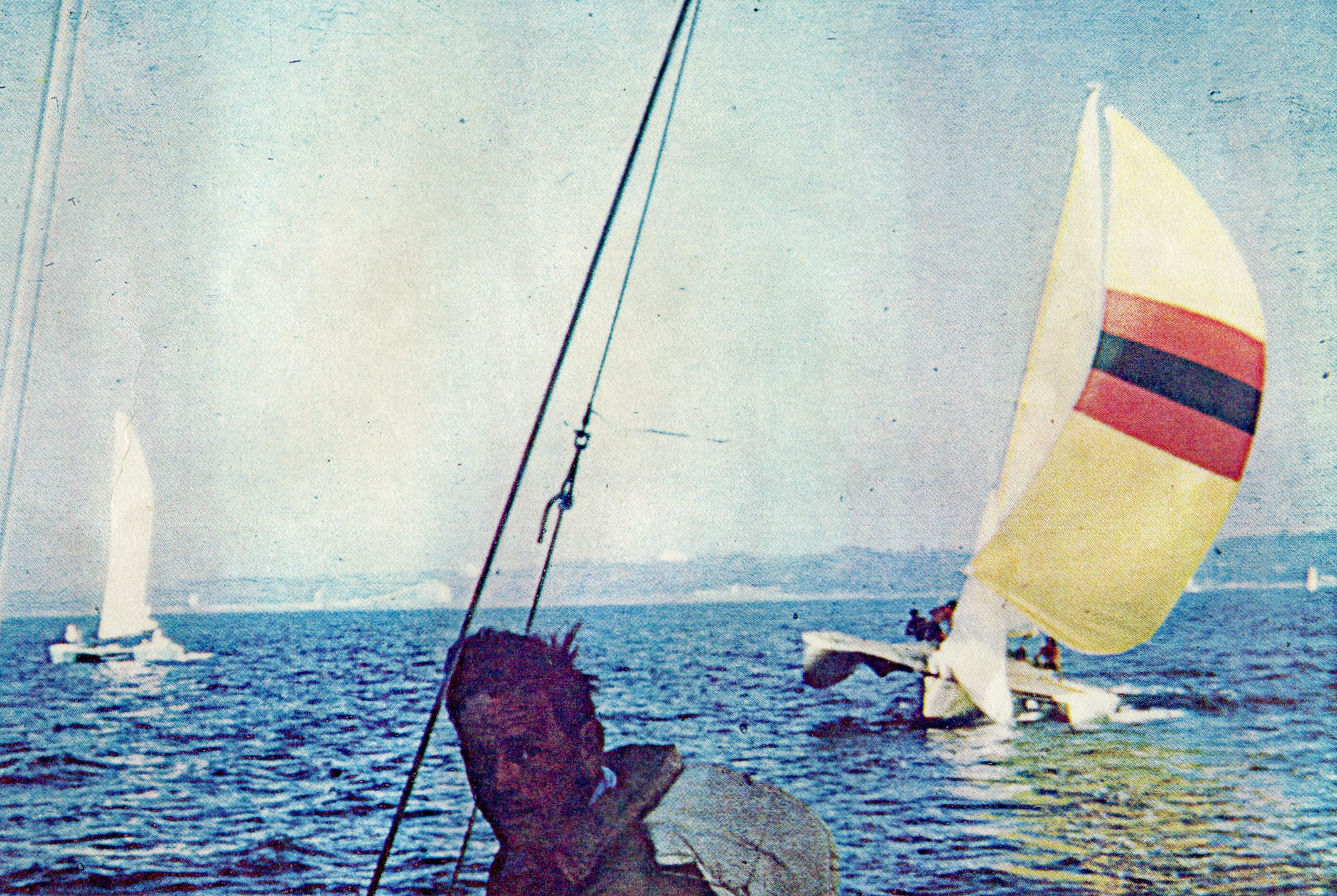
I am doing more scans from the old photos. This is Smoholla the Shaman racing, probably in summer 1981. It would have had the board instead of the keel, but with the old amas still.
Its interesting that we are behind Seafire, a Brown 40, as we won every race that year. Except a second against Limelight at Hoggshead. The mug is the diabolically brilliant Bob Dean. I’m not sure who the speedy cat on the left is. Maybe it is Limelight. This was a scan of an ancient Xerox. You use what you got; goes for photos and sail wardrobes.
One of the fun things about this job is that I get to see all kinds of things.
Someone sent this to me asking if I wanted to invest in this big production run. I’m always amused that the proponents of these kind of units are so certain of their success, without any water miles.
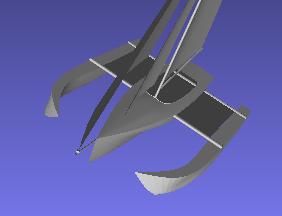
A screen capture of transparent mode.
Flat surfaces are placed. Next they get the cutouts.
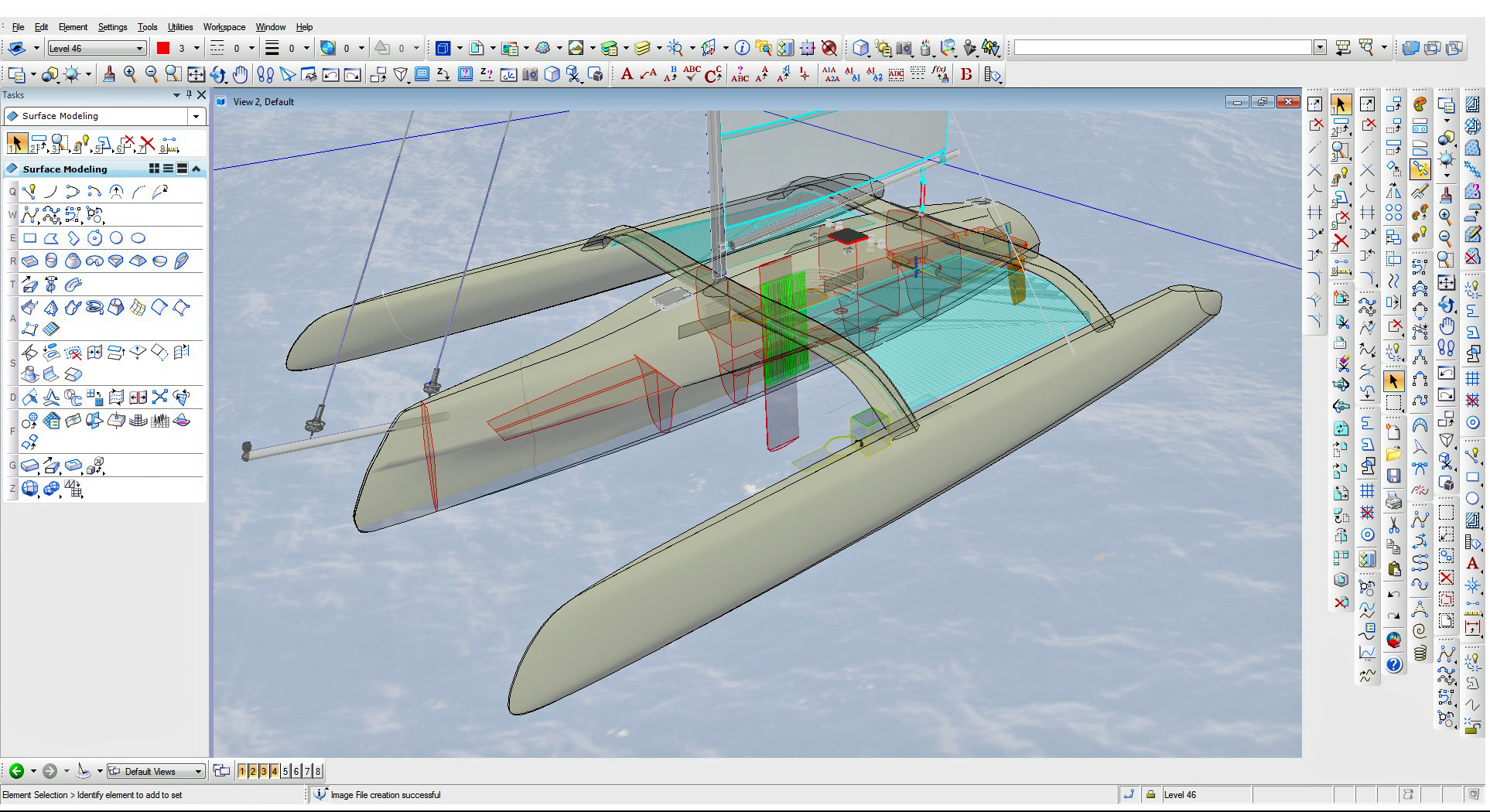
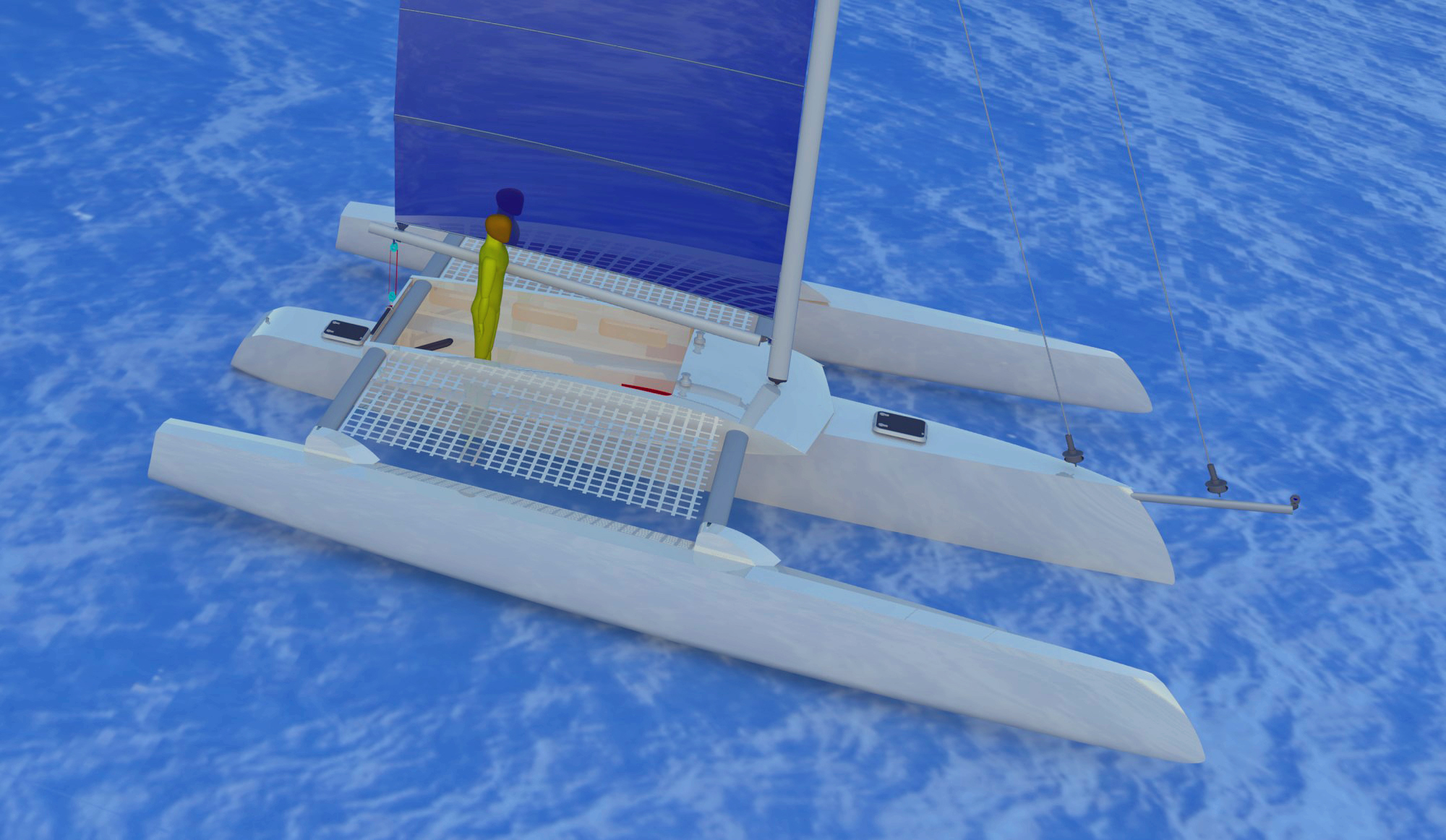
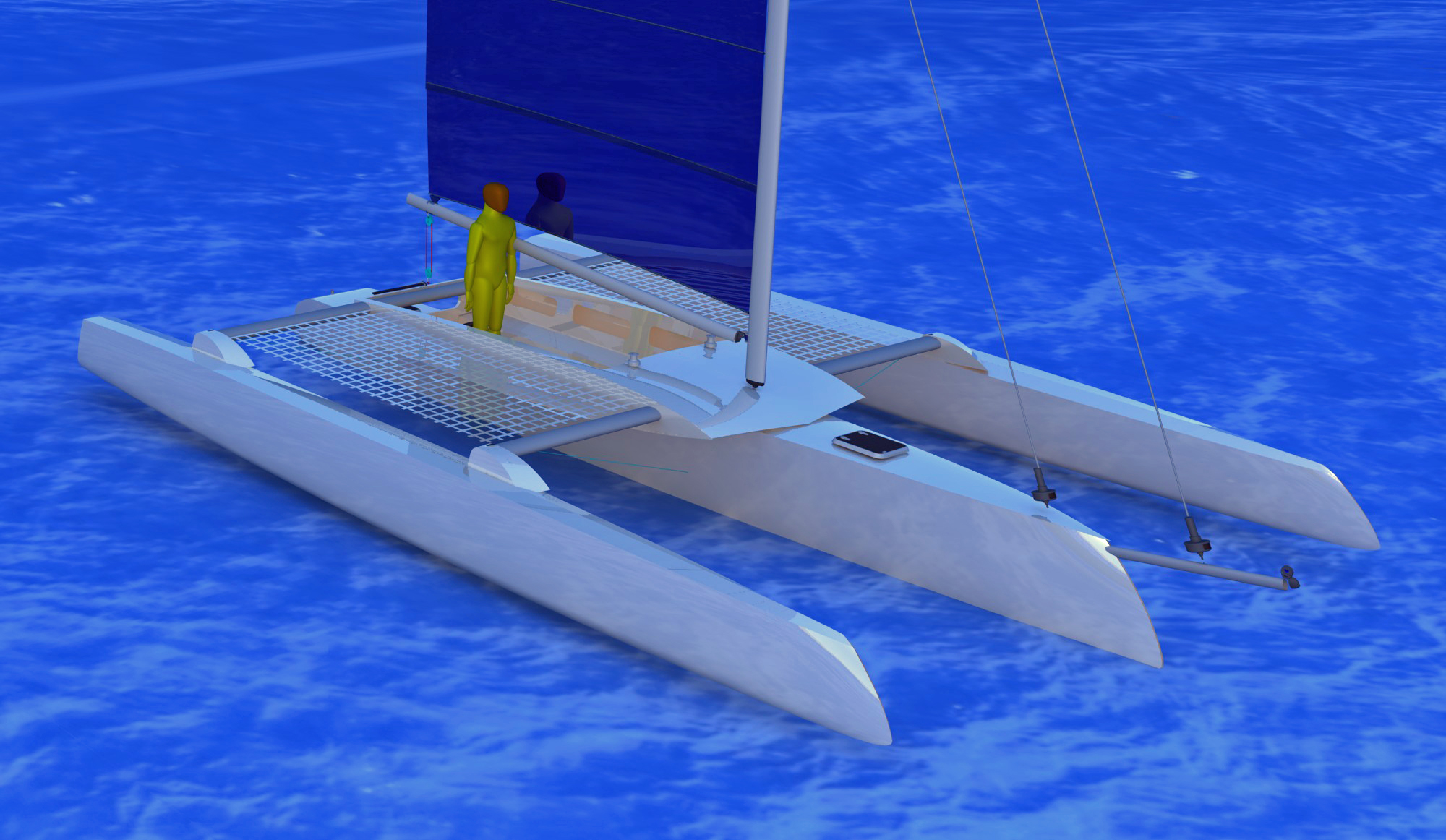
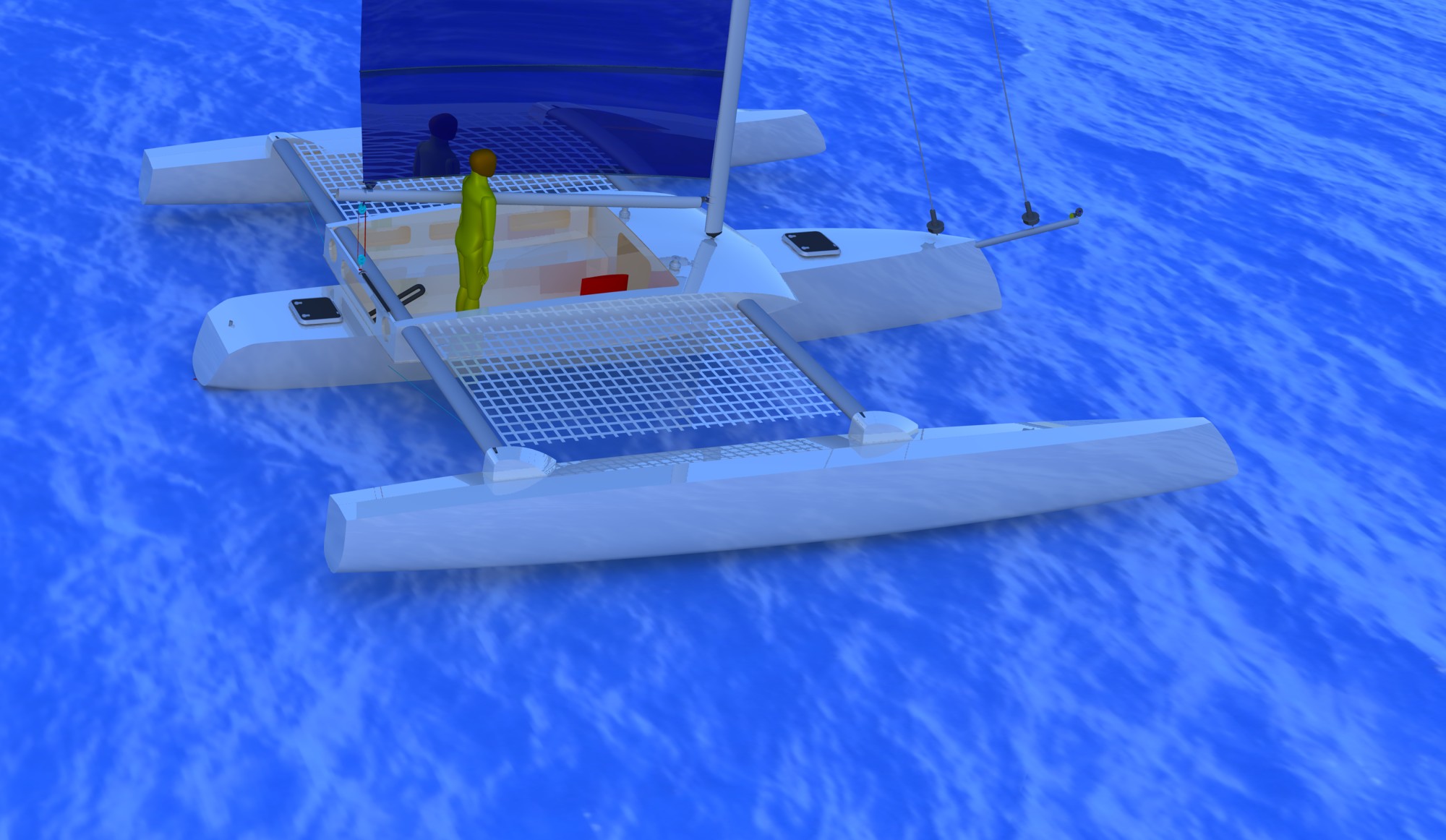
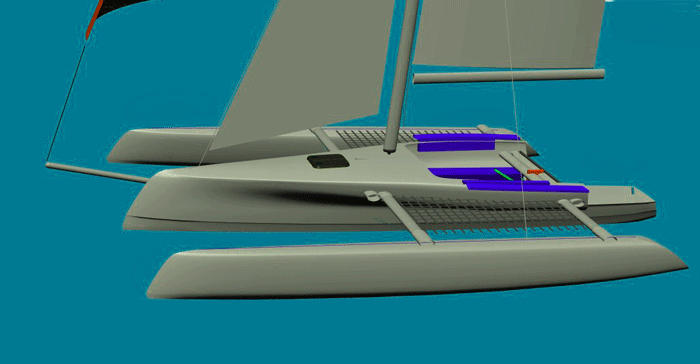
I finally got the first run of modeling the updated 23 daysail trimaran. Version B will have ama rudders and the even hotter version C will have foils. It is a developed plywood/epoxy unit with core vacuum bagged onto the flat surfaces needing that. And carbon fiber where it helps. At around 360 kg lightship weight, it can be built for around $5000 us in construction materials. The connecting beams should be carbon mast sections. The camper version comes next.
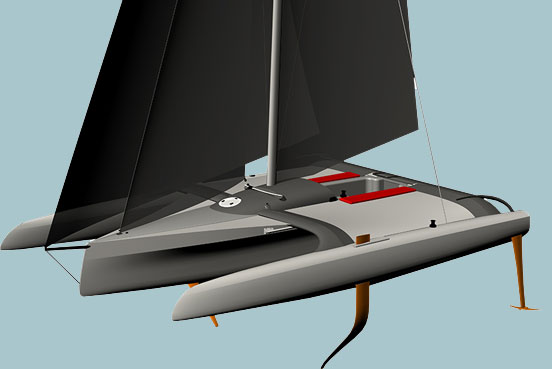
A couple of people have noted to me that this new MM TF-10 looks like my Trikala 19, with foils.
I must have come up in the world. MM used to only copy Tony Grainger.
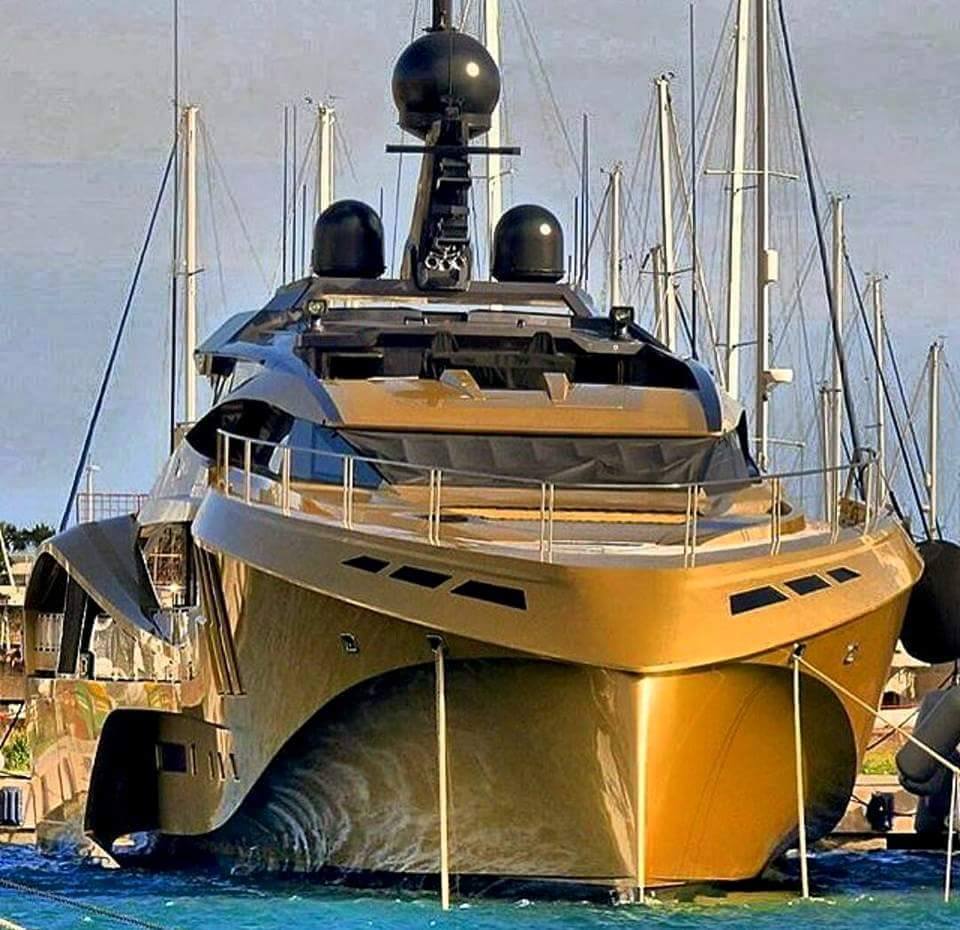
Has to be another Palmer Johnson. Not sure why they even bothered adding the amas. It is still a huge fuel guzzling megayacht. It must be some kind of cultural change when vestigal amas are added to megayachts as style points.
As an aside, Andre Cocquyt is presenting the 32′ KHSD power tri at the PBB Refit Show in Ft. Lauderdale later this January 26 and 27. https://refitshow.com/
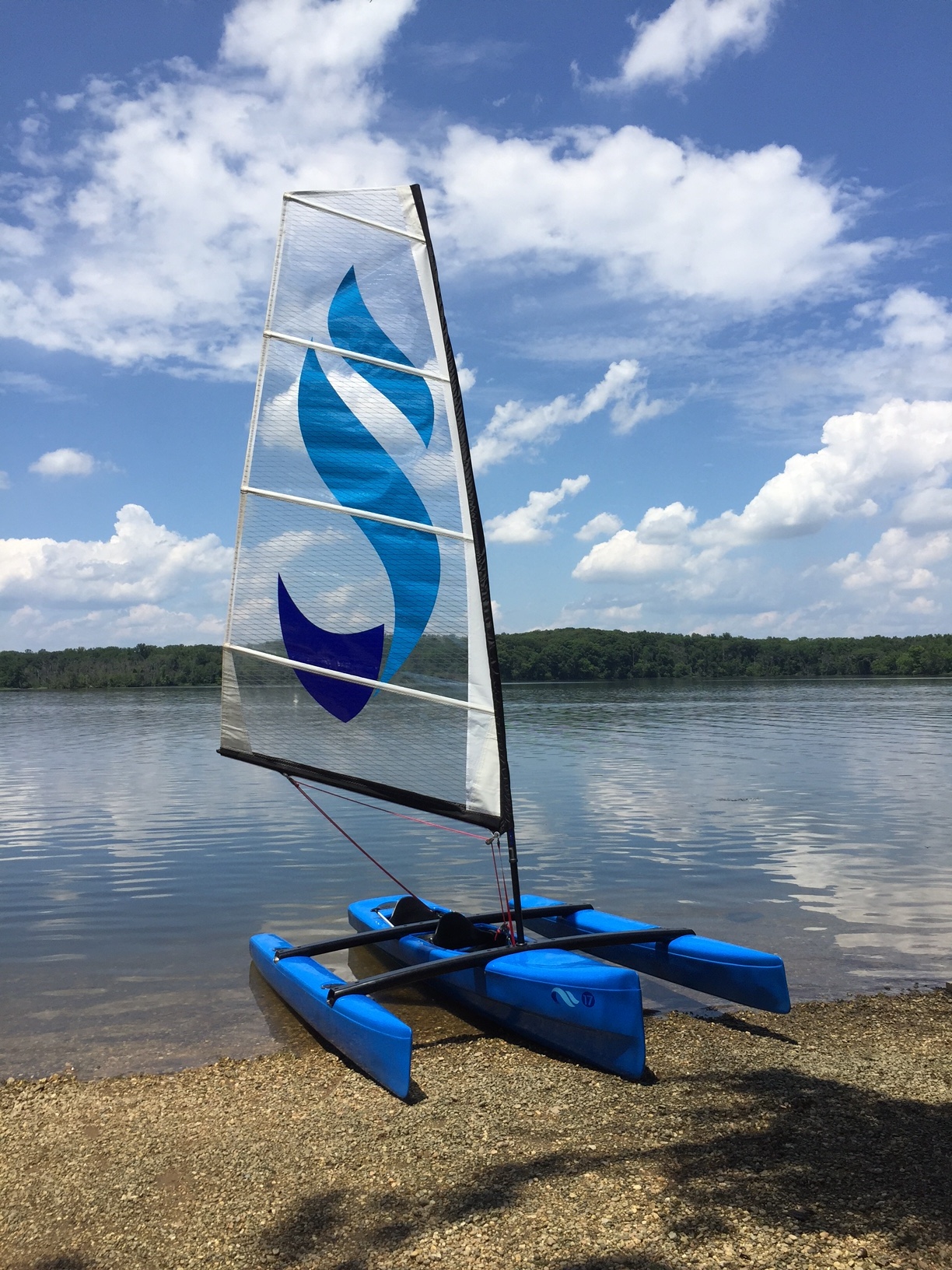
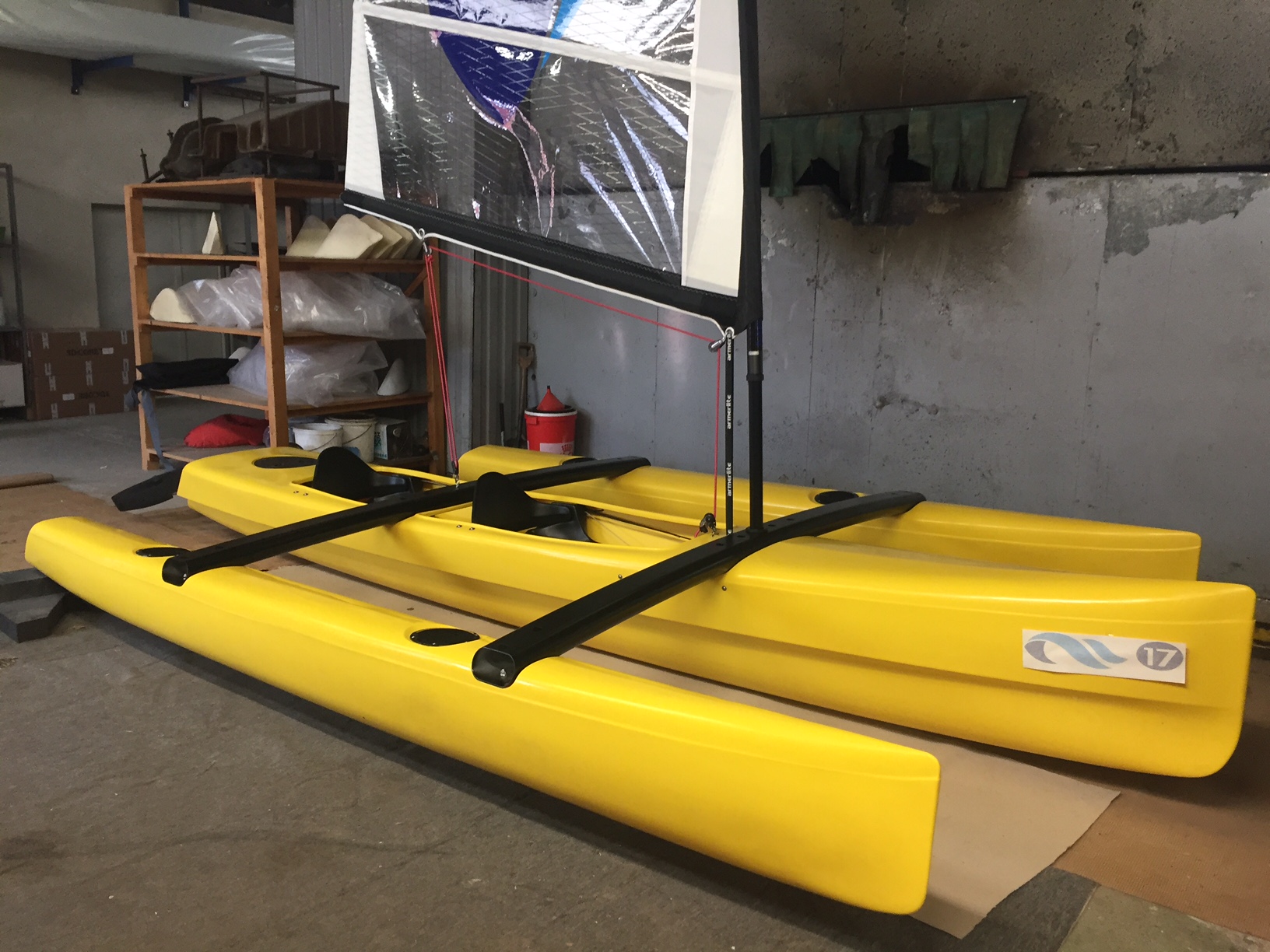
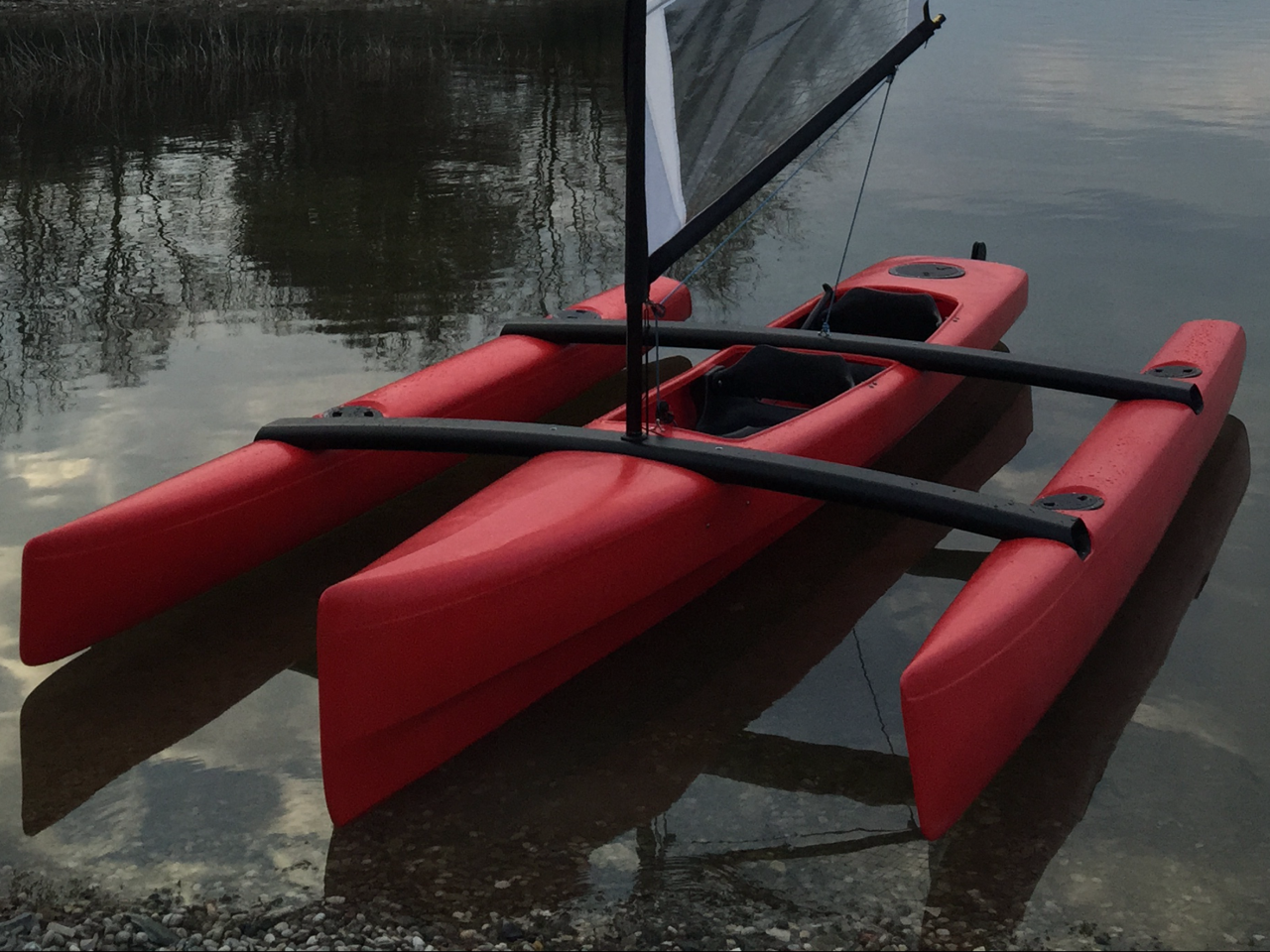
I’ve been modeling and producing shop drawings for this little unit for several years now. it looks like they might be in production soon. The idea is to be as simple to operate as possible for beginners. More details as I learn them.
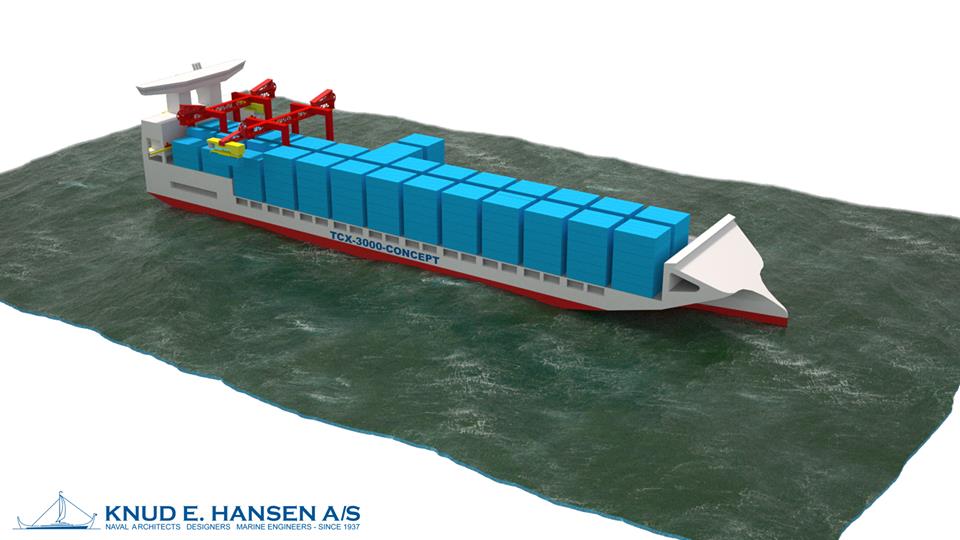
I found this container ship trimaran in Pacific Maritime magazine. KNUD E. HANSEN A/S was design office proposing these con/ro ships. By eyeball it looks like that would be too much weight to get in under 1/10 magic fineness ratio on the main hull. And I can’t believe that those tiny amas so close in would help much in a beam-on wave situation. it sure seems like a catamaran would be a better choice.
One of the guys from Steamradio just had a 40’ performance trimaran designed by Shuttleworth. I was surprised how much it resembled a study that I did for Phil Steggall a few years ago. It didn’t get built and I forgot about it. It is almost the same sailor use program. And it was based on improvements to my 40’ tri, the Geko. The Geko was optimized for singlehanding and light weather. The two trimarans above are for more wind than Geko usually found.
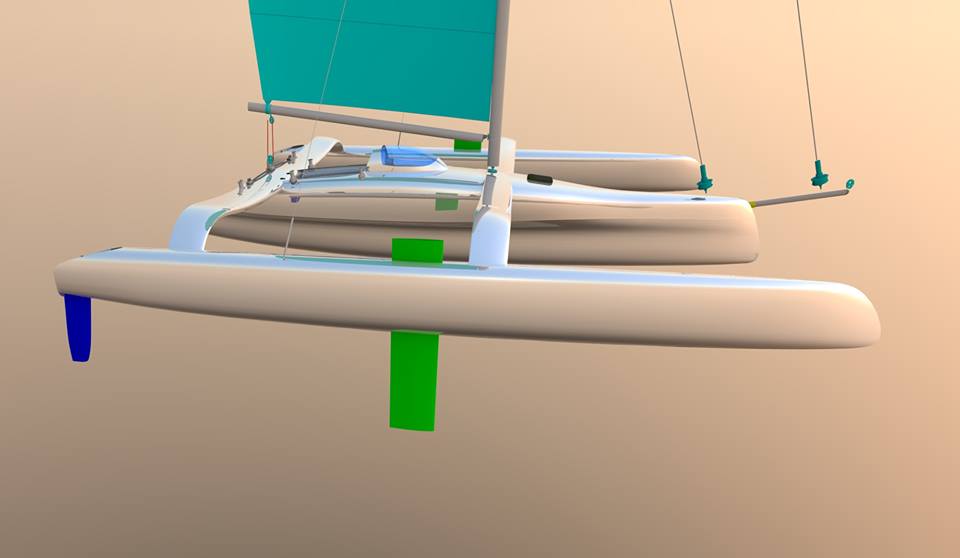
The beams are not swept forward on Phil’s boat. I asked multihull engineer and composites god Ronnal Reichard about that. He declared it an inefficient idea as it introduces an added twisting moment to the main beams. He dismissed the advantages of helping the ama bow as the ama has much more section property to work with, to ease that stress. The tri had square L/B design of course.
It has been suggested that swept forward beams keep the weight of the beams forward. The vast majority of the bending load, and thus the laminate, is near the middle and aft.
The biggest improvement to the Geko would have been adding the flare to the main hull. Any crew or guests need to toss their bags and foulies somewhere, out of the middle. I forgot about that. I thought everything else worked pretty well, for a shorthanding fast 40’ tri.
Boards in the amas solves the board intrusion in the main hull, but if short tacking, one needs a crew or it is more difficult to tack smartly. I wanted smart tacks on the Geko. Not everybody has to short tack all day in light weather.
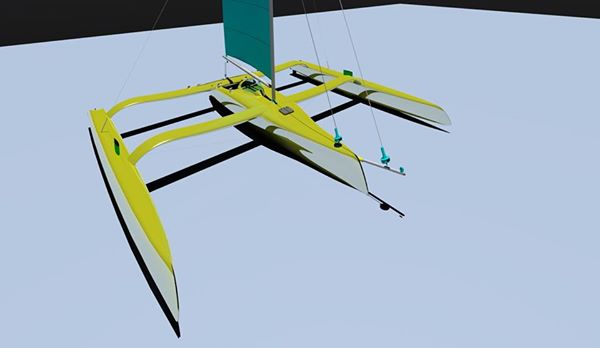
Where to helm from is an interesting exercise. And I found that it is most dependant on the crew or lack of. Reflexively, everybody should be up on the high side. These boats typically have almost deck sweeping mains, and are doing twice the speed of anything else out there. Anything could be happening behind that main. I always ended up in the cockpit, down low, so that I could see traffic approaching from the low side, helm in one hand, and mainsheet in the other.
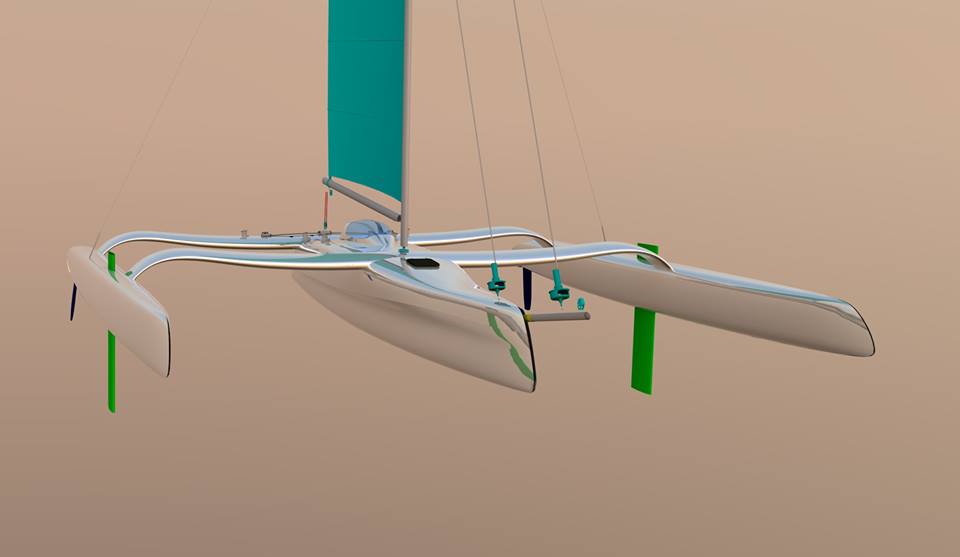 With a crew, that is not a problem, but where to steer from depends on how much the helm (owner usually?) trusts the mainsheet trimmer. I pretty much only trust myself when it’s gusty, unless Dave Calvert is crewing….
Is that a pair of main winches I see on the top view on the back beam? That suggests it’s optimized for at least double handing or a crew then. Double handing I was told.
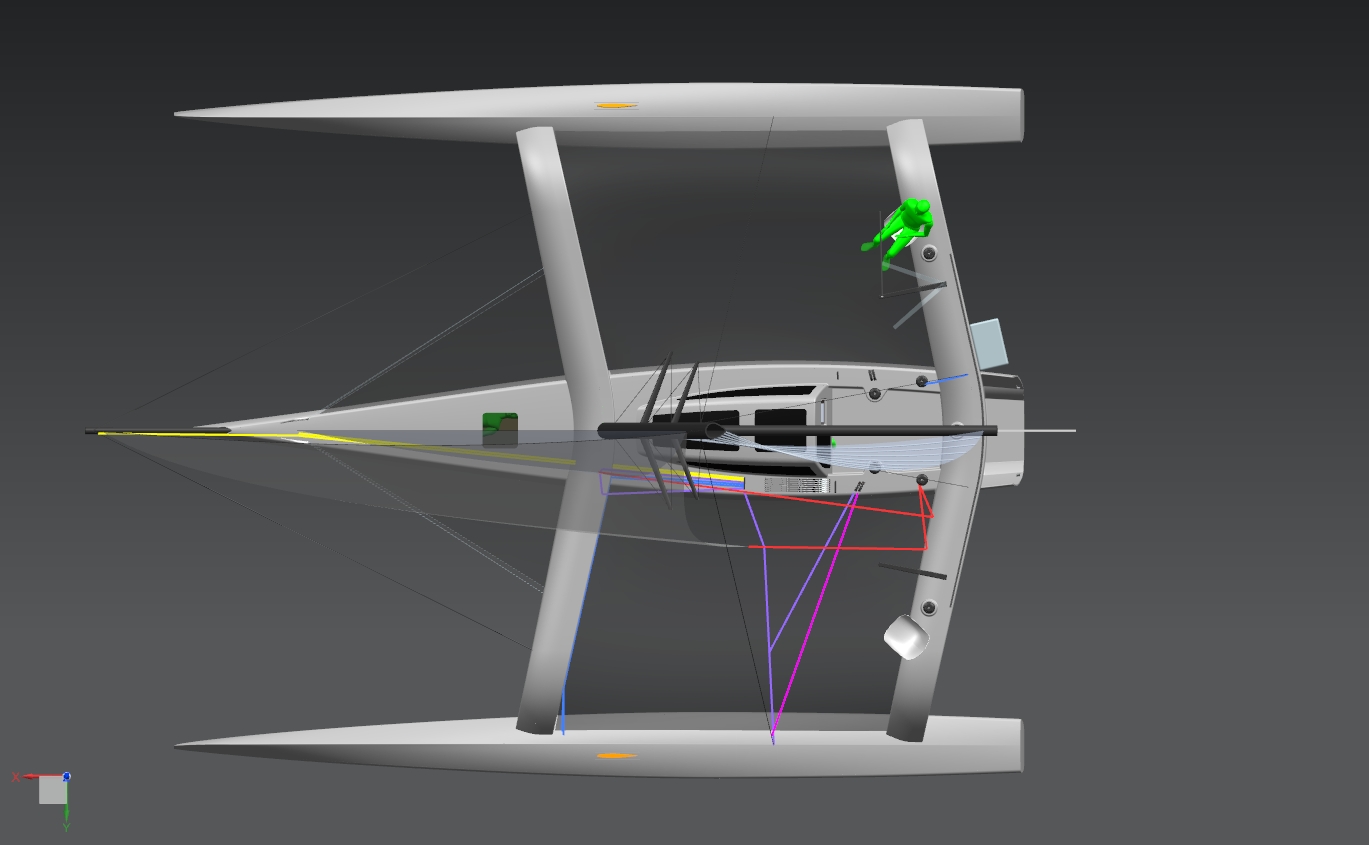
the Shuttleworth tri
It’s all very interesting, imagining how design affects life blasting upwind. And the interesting ways that a design can be fitted to the owner’s individual needs.