From fish expo. Net systems for multihull nets. I used on Geko more than 20 years ago. I prefer these knotless nets in any situation where walking barefoot is not done.
They are experienced with catamarans and can set up the edges for a perimeter line. Ask for Xzalivar.
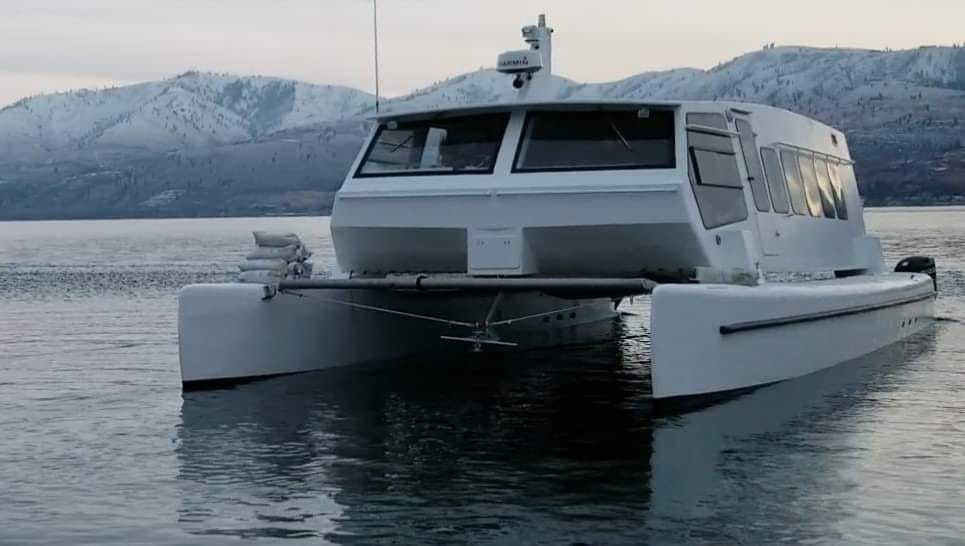
I found a picture of the new Lake Chelan ferry taken during sea trials.
It was loaded down with about 8000 lbs. of sandbags, which was to simulate 32 passengers and a ton of cargo. It did the required 20 knots, but I thought it should have been able to do better. It still could.
The pair of 200 hp. outboards were still new and weren’t pushed exceed 4000 rpm. The props had not been experimented with.
There was substantial water sloshing around in the bilges. The roll and tip bottom paint application was never tipped. The surface was like sandpaper. The owner can wet-sand the hulls. And finally, there were a few divots below the waterline that could be filled next haul-out.
#lakechelan
#multihulldesigns
#catamaran
#catamaranferry
The future caught up with me this autumn and I didn’t see it coming. 6 or 7 years ago I bought an amazing plotter. A Canon that could do a page in something like 20 seconds. It could do full size patterns and everything. No more repro copies of an original. It would be just in time printing. $5000 and supposed to be worth it. A couple of years ago it stopped working. After about a $1000 in repairs it was working again. Until it quit again and I was warned it would be another $1500 and that might not be enough. That was last year. People were slow to pay at the time, so I parked the plotter. For at least a couple of decades, I could send a dxf file to University Reprographics and they could plot it out at full size. An overseas job came up that needed that. It turns out that is not possible anymore. To plot AutoCAD, they would need their AutoCAD. With all of us having plotters, the repro shops had to cut costs. That meant no more AutoCAD at the repro shop. I tried every other repro shop in Seattle. Nobody plots AutoCAD anymore commercially. And even with mere PDFs, it was more than $500 for a hull plot. So I am getting my plotter fixed. Parts are on the way. I’ll part with the cash. As soon as repairs are done, I can do everyone’s full size pattern plots again.
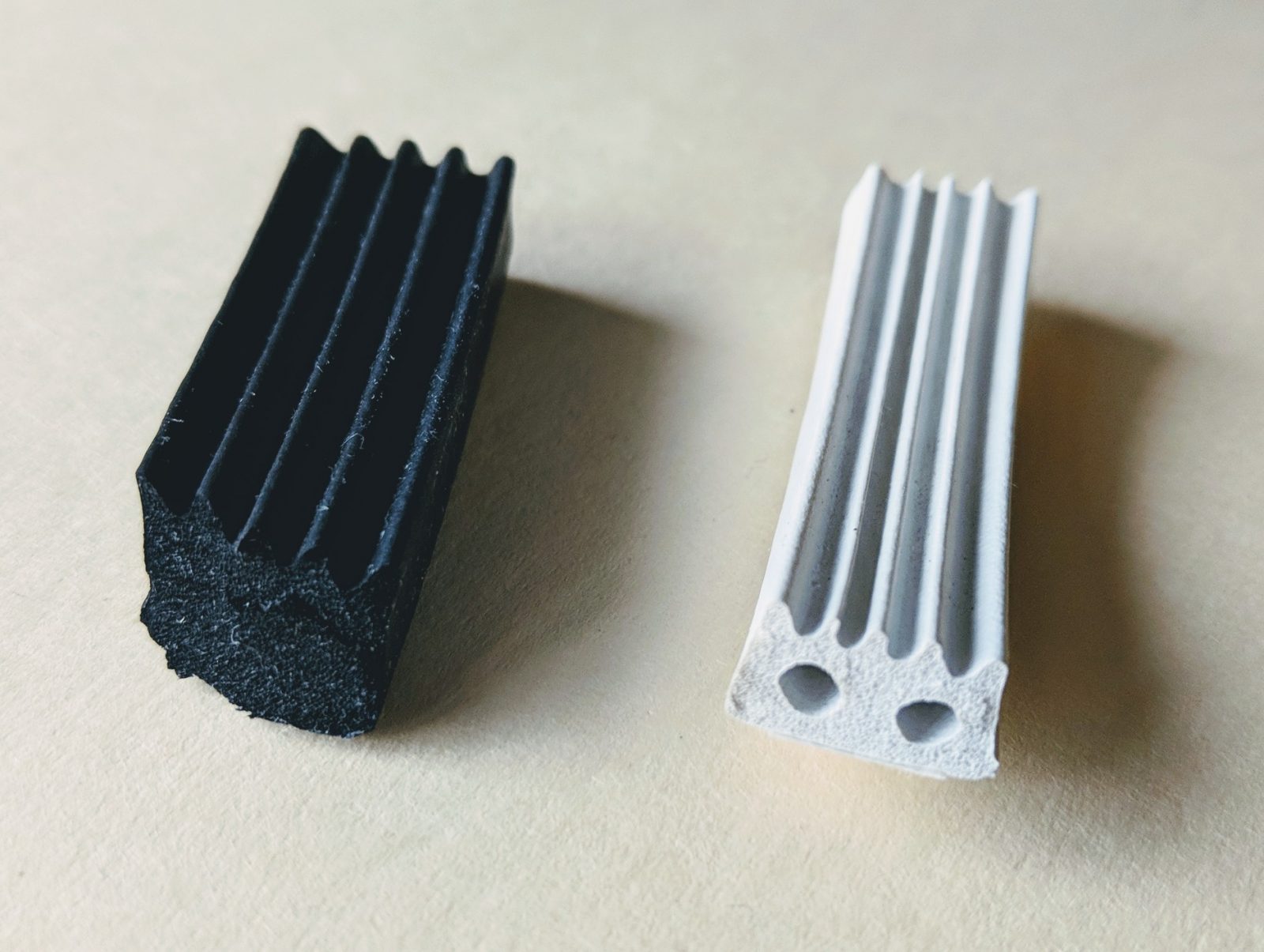
I think that I have tried every kind of weatherstripping to seal door closures or wet hatches. This model, called Rubber seal, ribbed, seems to be the best I have ever tried. All are adhesive backed. The ribs allow one part to deflect, without distorting the whole seal like a square section would. The black one is 3/8″ thick, from Grainger. https://www.grainger.com/product/TRIM-LOK-INC-Rubber-Seal-10D149
The white one is at Home Depot. They don’t carry black. I think is 5/16″ thick.
Paul started with the KHSD 45 cruising cat plans, but wanted some changes. I did a composite bow tube design for him.
I don’t recall being told it would be forward cockpit. The helm is indoors, which is always good.
I recently had to review a chainplate on one of my COI cats and send a note to the USCG.
I see from the X-Ray report that the Aolani chainplates were not steel, but composite as I thought they were.
These composite plates are immune to corrosion, unlike metal ones.
I assume the builder used my layup schedule as I have sent earlier. I see no reason to doubt that.
They are easy for the builders to build in a huge safety factor.
Instead of being fastened onto a hull, these synergistically combine to both strengthen the hull and the chainplate.
Unlike the metal plates, these have some resiliency so make all the parts longer lived.
Any delta in the parts from the loads would show up immediately and early by cracks in the paint. Unlike metal plates which usually are not painted.
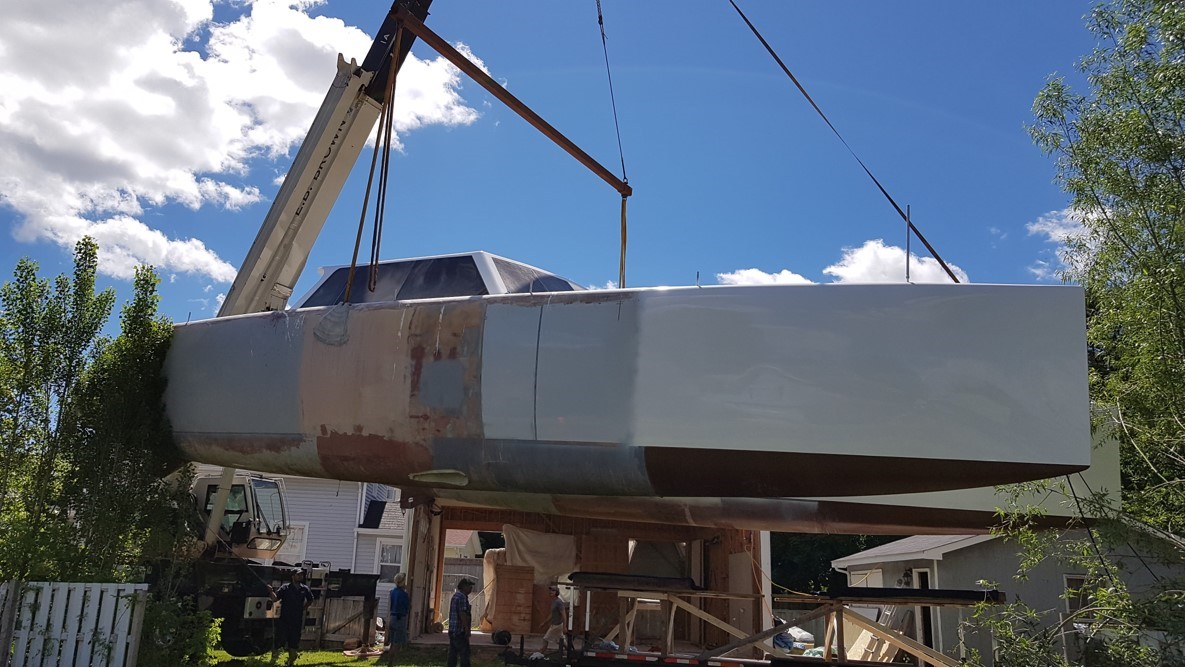
Attached find a picture of one of my other catamaran designs with composite chainplates. Note that he lifts his entire vessel with only the three chainplate locations.
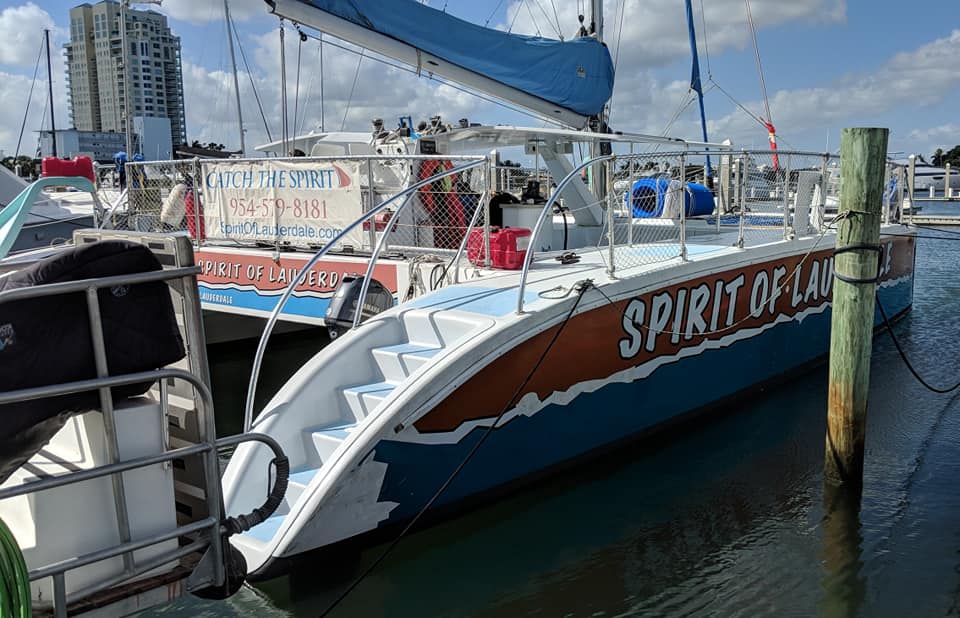
I got to visit my 49′ daycharter cat in Fort Lauderdale . Always one of my favorites. Met captain Jason. Built mid 90’s by legendary builder, Andre Cocquyt as a composites class project. Students included IBEX presenter, Belle, Blanding. Still looks good and can be built remotely from assembly.
Another source for a whole armload of composite supplies and prices not too bad. No knitted fabrics though. In the west of the US only. https://www.tapplastics.com/about/locations