I’m coming up with a few options for rotating wingmast hounds.
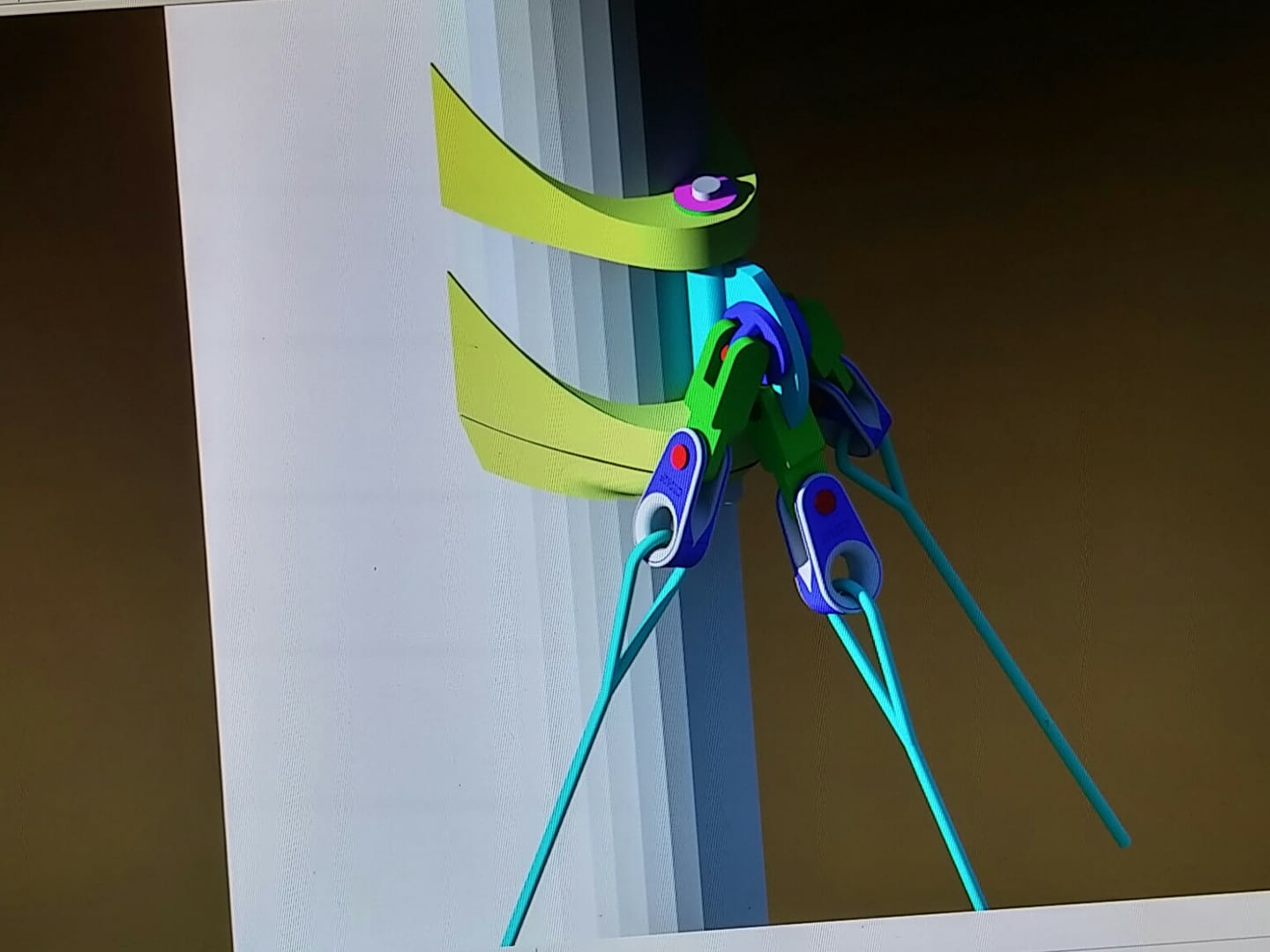
First with padeyes for the shrouds. First run at 200 degree (100 degrees each way) wing mast solution, with Colligo fork fittings. Lime green is toggles and blue is SS padeyes.
Composite foundations (yellow). Basically the whole lot stays in one place, and the mast swings like a door behind it.
It should have much less wear and chafe on the composite stays.
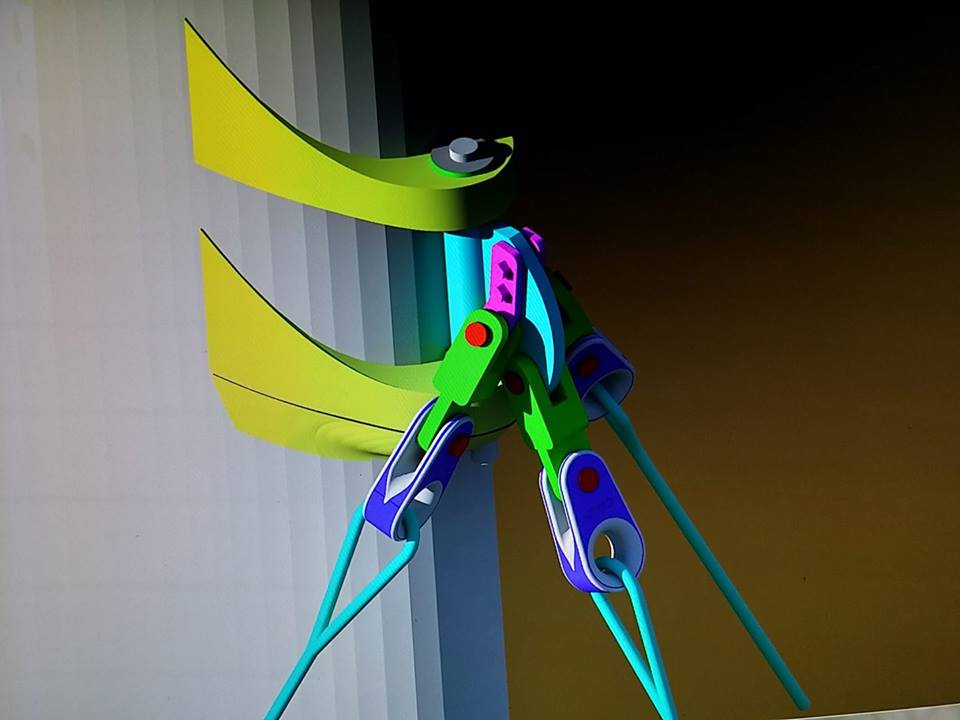
Now with tangs instead of padeyes on the rotating bit. I do have great respect for the opinions of the experienced sea dogs on the last post. I have also have been working this for a few decades. Keep in mind, 99% of all rigging out there is terminated with toggles. We shouldn’t just abandon toggles for purity. In my experience, toggles are pretty good at aligning to the load. The old batwings would chew up toggles, I admit. Pure synthetic would be wonderful, but not quite there. I do have one possible idea on that. Soon as I can model it. Too many deadlines here.
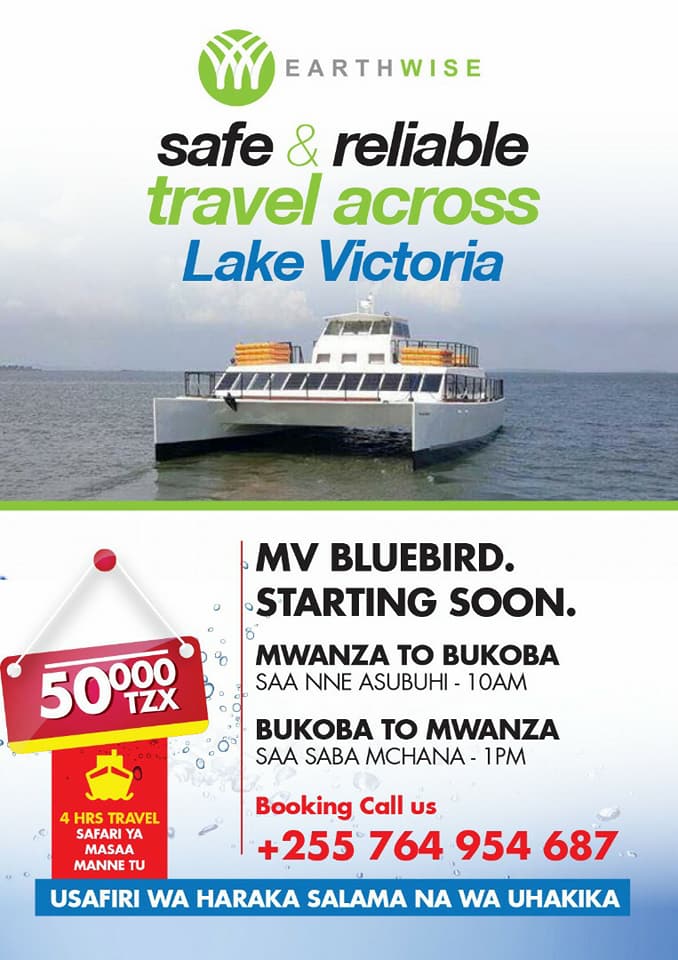
I should explain why the two Lake Victoria Ferries look so different. They had the same stock plan set and are the same beam overall.
They look so different.
First, I had hoped that they would be built in Uganda. That didn’t happen. They were to be sent over in containers. For the second boat, I streamlined the process by lowering the freeboard so that the hulls could fit in the containers without more surgery. Amani needed 7 containers; Bluebird, 4.
Again the beam overall is the same. Amani is open ocean and Lake Victoria is a lake.
The migration to Win 10 and Office 16 is mostly there on the new laptop. Will be the office web machine and portable CADD now.
So far easier than I feared. It has however taken an hour and Bing for me to get into the blog here. Matthew helped with suggestions.
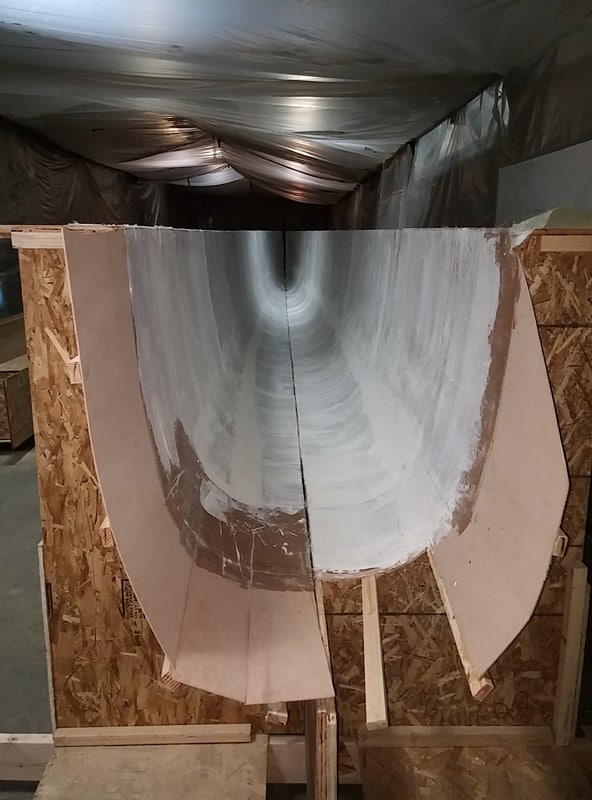
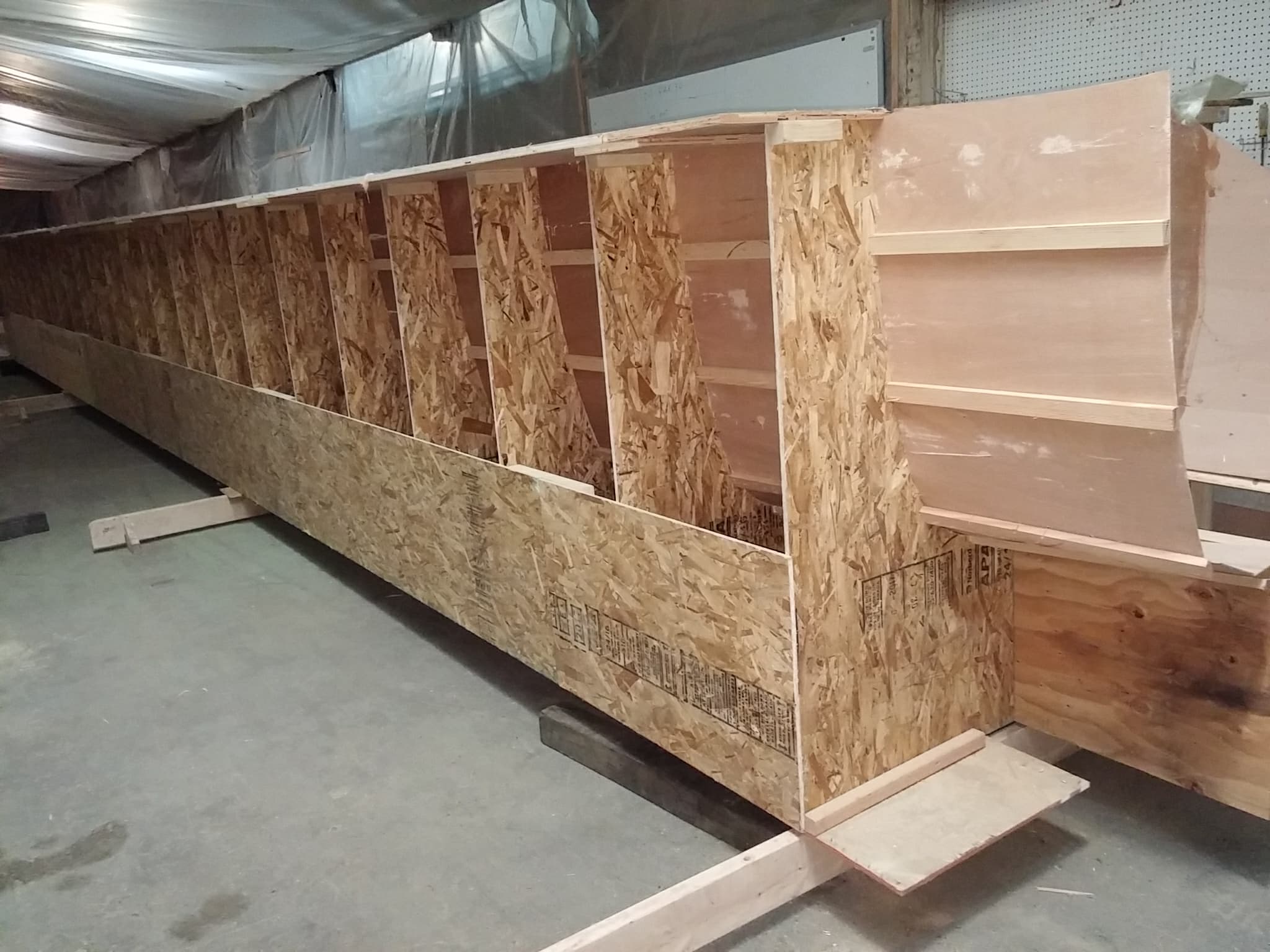
Amazing rapid construction by Albert, the Thain Boatyard shop lead. Not everyone might understand that this female mold is developed plywood, with minimal fairing. I had been doing this with CM before, but Albert simplified it even better.
He CNC cut out the stations, then tortured a single layer of 4mm ply into it.
That is huge time savings. It becomes a big 3 D batten.
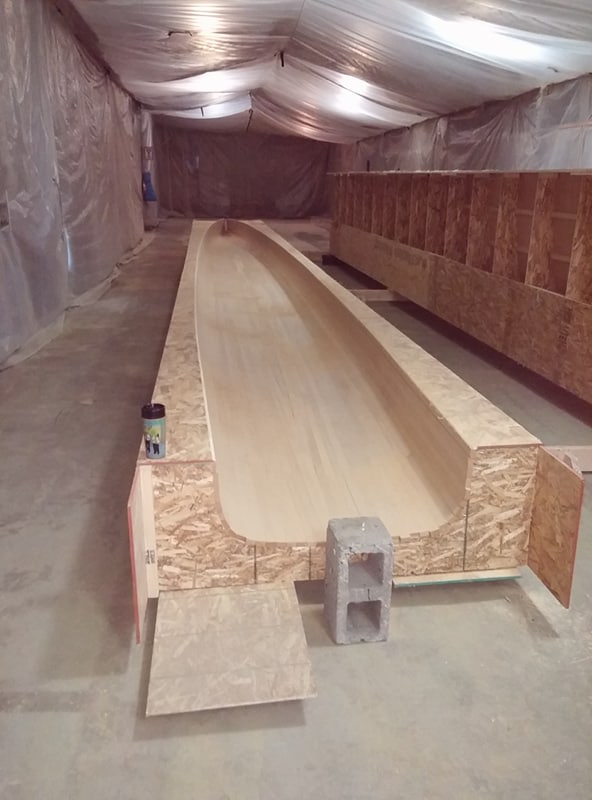
The other shape is the strip planked deck mold. It had to be done the old ways. It looks like to could also be a party barge mold.
inside the ferry moldoutside the moldthe strip planked deck mold